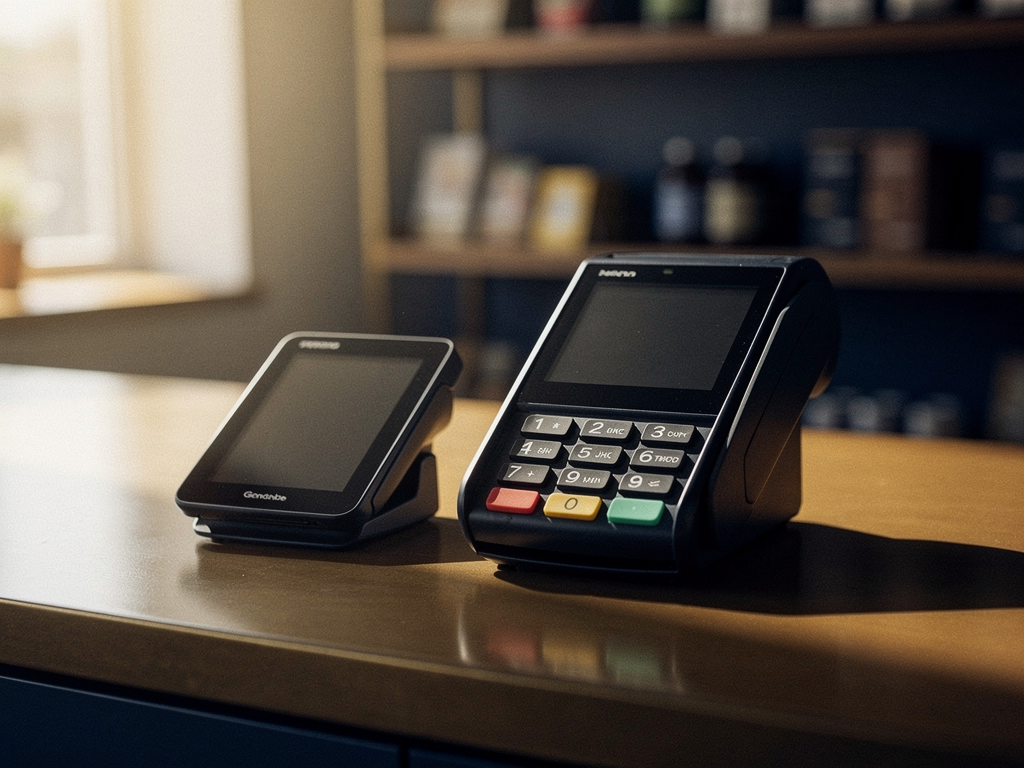

Interchange is the wholesale cost of accepting a card, set by Visa, Mastercard, Discover, and Amex and paid to the bank that issued your customer's card, and it is identical for every business, so nobody gets a discount on interchange itself. Your monthly rate changes because interchange depends on the mix of cards you process, and a different mix of rewards cards, debit, tapped sales, and keyed-in sales produces a different blended cost every month.
What interchange actually is
Interchange is the wholesale cost of accepting a card. The card networks, Visa, Mastercard, Discover, and Amex, set these fees, and they are paid to the bank that issued your customer's card. Think of it as the raw cost of goods for a card transaction, the part that exists before any processor adds a single cent of its own.
Two facts about interchange surprise most owners. First, it is non-negotiable and identical for every business of your type running the same kind of card, so no processor can give you a discount on interchange itself. A salesperson who promises to lower your interchange is either confused or selling fog. Second, there is not one interchange rate, there are hundreds of them, published by the networks in long rate tables and updated twice a year, usually each April and October.
On top of interchange sit the assessment fees, the networks' own cut, which run roughly 0.13 to 0.14 percent of volume for Visa and Mastercard. Interchange plus assessments together are the true, unavoidable cost of accepting cards. For most small businesses that combined number lands somewhere around 1.7 to 2.4 percent of volume. Everything above that line on your statement is markup.
Why one card costs more than another
Interchange is not a flat number because not every card carries the same risk or the same rewards. A few patterns drive almost all of the variation, and once you see them your statement stops looking random.
Card type matters most. A basic debit card runs cheap because the money moves straight from a checking account with little risk. A premium rewards or corporate card runs far more expensive, because the bank funds those airline miles and cash-back points partly out of the interchange you pay. When a customer pays with a high-end travel card, you quietly cover a slice of their points.
How the card is presented matters next. A card that is tapped, dipped, or swiped in person costs less than one that is keyed in by hand, because the network can verify it is really present. Card-not-present sales, meaning online and over the phone, cost more than in-person sales for the same reason. Fraud risk rises when the card is not physically there, and interchange prices that risk in.
Why the same store sees a different rate each month
Here is the part that frustrates owners the most. You did nothing different, yet this month's processing bill is higher than last month's. The reason is mix. Your blended rate is just the weighted average of every card you ran, and the blend shifts whenever your customers' payment habits shift.
A month heavy with rewards cards, keyed-in phone orders, or online sales costs more than a month heavy with tapped debit at the counter. December tends to run higher than February because holiday shoppers reach for their points-earning cards. None of that is the processor changing your deal. It is interchange doing exactly what it always does, reflecting the real mix you processed.
Where a processor can quietly take advantage is in hiding this. On a tiered or flat plan, the markup is blended into one number, so a rate increase and a normal mix shift look identical on the page. That is why the model you are on, covered in our guide to interchange-plus versus flat rate and when to switch, decides whether you can actually see what changed.
How to see your own interchange clearly
There is one pricing model that separates true cost from markup on the page, and it is called interchange-plus. You pay the real interchange straight through, exactly as the networks set it, plus one fixed, visible markup. When interchange moves, you see it move. When your processor's margin moves, you see that too. Nothing hides in a blended bucket.
If you want to find your own number today, our savings and effective-rate calculator turns last month's total fees and total card volume into the single all-in percentage you actually pay, and our related guide on how to calculate your real effective rate from your statement walks through the math line by line.
When you are ready for a human read, send me your last statement through the free statement review. I will show you what is true interchange, what is assessment, and what is pure markup, and I will board you on a North interchange-plus account where the true cost passes straight through with one transparent markup on top. North is the largest privately owned processor in the country, so you get direct buy-rate access without a third-party middleman marking it up.
Want this read for your own statement?
Send your last processing statement and Alex will show you your true effective rate, what is interchange, and what is pure markup. It costs nothing either way.