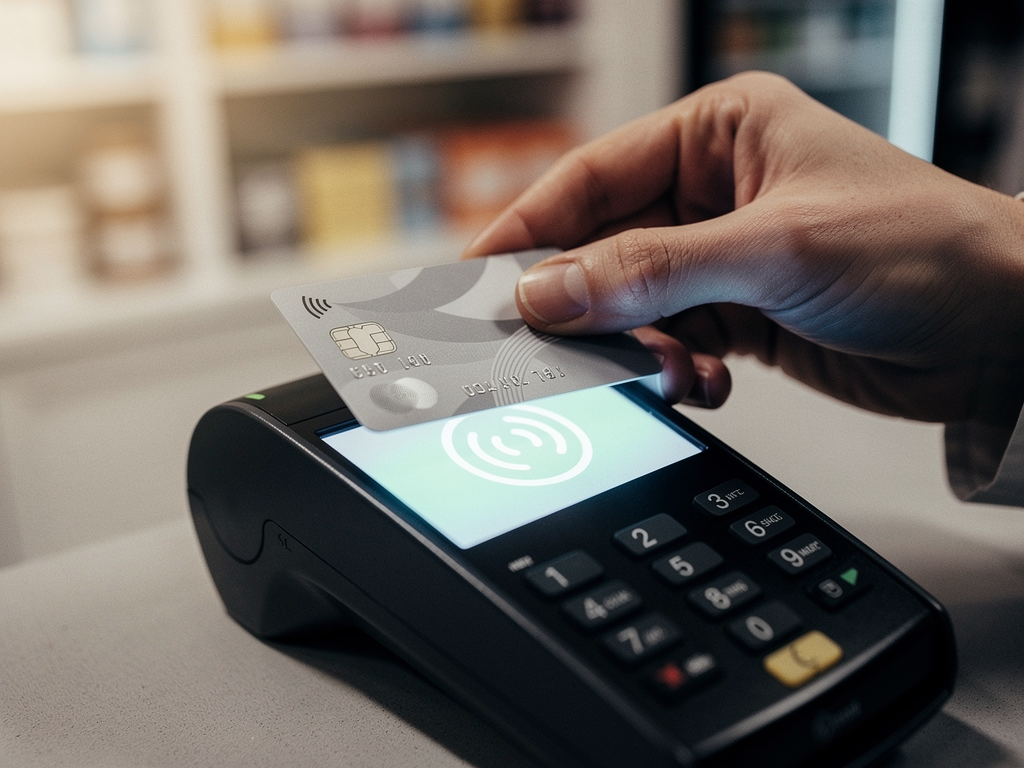

To find your true effective rate, take the total fees you paid for the month and divide them by your total card volume for that same month, then multiply by 100. That single percentage is what you actually pay all in, and it is almost always higher than the rate you were quoted, because it includes every markup line on the statement, not just the headline number.
The two-minute calculation
Your effective rate is the one number that cuts through every confusing line on a merchant statement. The formula is simple. Take the total fees you paid for the month, divide by your total card volume for the same month, then multiply by 100. The result is the real percentage you pay on every dollar that runs through your terminal.
Two figures are all you need, and both sit on your statement. Total card volume is the gross amount of card sales you processed, often labeled sales volume or gross processing. Total fees is every charge the processor took, which means you must add up all of them, not just the discount rate line. The whole point is to capture the fees that hide below the headline.
If you ran 40,000 dollars in card sales and paid 1,200 dollars in total fees, your effective rate is 3 percent, even if the rate you were quoted was 1.69 percent. The gap between the quote and the real number is the markup, and finding yours is the entire exercise.
A worked example, line by line
Picture a typical statement for a shop that ran 50,000 dollars in card volume last month. Near the top sits the friendly number, a 1.79 percent qualified discount rate, about 895 dollars. That is the figure the salesperson quoted, and if you stopped reading there you would feel fine.
Keep scrolling and the real bill assembles itself. A non-qualified surcharge of 1.1 percent on the rewards and keyed cards adds roughly 410 dollars. A monthly statement fee adds 15 dollars. A statistical package fee adds 19 dollars. A PCI compliance fee adds 25 dollars. A batch fee, charged each day you settle, adds about 30 dollars across the month. Per-transaction authorization fees add another 95 dollars.
Now total every fee, not just the first one. Roughly 895 plus 410 plus 15 plus 19 plus 25 plus 30 plus 95 lands near 1,489 dollars. Divide 1,489 by 50,000 and you get an effective rate of about 2.98 percent, not the 1.79 percent on the first line. That 1.2 point gap is real money, on this example more than 7,100 dollars a year, and it lived entirely in the lines below the quote.
Why the rate you were quoted is not the rate you pay
Interchange is the wholesale cost of accepting cards, set by Visa, Mastercard, Discover, and Amex and paid to the bank that issued your customer's card. It is non-negotiable and identical for every business, so nobody gets a discount on interchange itself. Our companion guide, what is interchange and why does my rate change every month, breaks this down further.
Your effective rate moves month to month because interchange depends on the mix you process. Rewards and corporate cards cost more, tapped and swiped cards cost less than keyed-in ones, and card-not-present costs more than in person. A different month means a different mix and a different blended rate, which is why a single quoted number can never tell the whole story.
The markup lines to add up
Beyond interchange, look for the lines that are pure margin. The usual suspects are monthly statement fees, a statistical package fee, a PCI compliance fee, daily batch fees, per-transaction authorization fees, a monthly minimum, and any non-qualified surcharge from a tiered plan. Our deeper guide on statistical package, PCI non-compliance, and other hidden ISO fees names each one and shows which can be removed.
A healthy effective rate depends on your card mix and ticket size, but many businesses pay between 2.8 and 3.5 percent all in while the true cost sits closer to 1.8 to 2.4 percent. If your effective rate runs above 4 percent, something is badly out of line and worth acting on this week.
North's interchange-plus pricing passes the true interchange straight through and adds one transparent markup, so you can finally see what is actual cost versus what is the processor's margin. Run your own number first with our savings and effective-rate calculator, then send me your statement through the free statement review and I will run this exact calculation with you, line by line, and show you precisely where the gap comes from.
Want this read for your own statement?
Send your last processing statement and Alex will show you your true effective rate, what is interchange, and what is pure markup. It costs nothing either way.