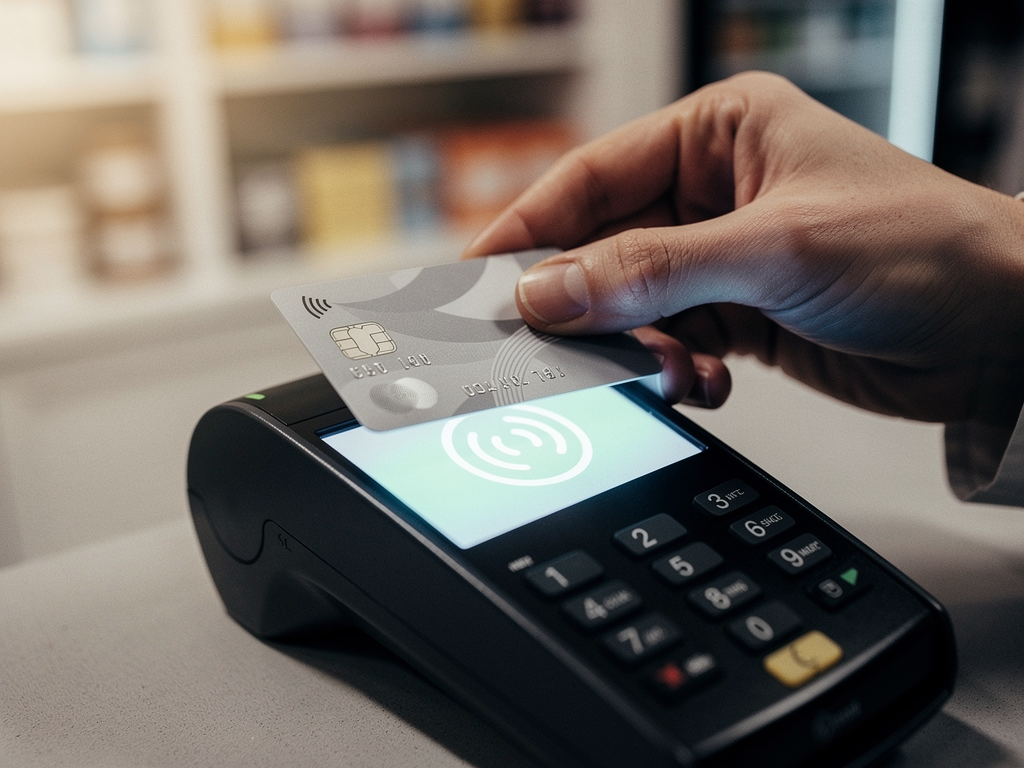

There is no single good rate, because the right number depends on your monthly volume, your average ticket, and which pricing model you are on, but a healthy all-in effective rate for most small businesses lands between roughly 2.3 and 3 percent. A flat 2.9 percent is reasonable for a small or new business that values simplicity, yet it usually becomes expensive once you are processing more than about 10,000 dollars a month, where interchange-plus pricing starts to win clearly.
Is 2.9 percent good? It depends on three things
The honest answer to is 2.9 percent good is another question, good compared to what, and at what volume. The real cost of accepting cards, meaning interchange plus the networks' assessments, runs roughly 1.7 to 2.4 percent of volume for most small businesses. Everything a processor charges above that is markup. So a flat 2.9 percent plus a fixed per-transaction fee is reasonable, but it is not cheap, and whether it is right for you depends on three things.
First, your monthly volume. At 3,000 dollars a month the simplicity of a flat rate is worth the small premium. At 50,000 dollars a month that same flat rate hands the processor thousands of dollars a year in margin you could keep. Second, your average ticket. Flat fees with a fixed per-transaction cost punish small tickets, so a coffee shop selling 4 dollar lattes feels the 30 cents far more than a furniture store selling 1,200 dollar sofas. Third, your card mix, since debit-heavy in-person businesses have a lower true cost than rewards-heavy online ones.
A useful benchmark, sourced from the wider industry, is that most small businesses are quoted somewhere between 1.5 and 3.5 percent, while the all-in effective rate they actually pay clusters between 2.8 and 3.5 percent. If your effective rate sits above 4 percent, that is the line where it is time to renegotiate or switch.
What the big flat-rate names actually charge in 2026
Flat-rate pricing is the model behind the famous names, and the published 2026 numbers are worth knowing. Square's free plan charges 2.6 percent plus 15 cents for in-person tapped, dipped, or swiped sales, and 3.5 percent plus 15 cents for keyed-in cards. Square also raised its online rate to 3.3 percent plus 30 cents in January 2026, up from 2.9 percent plus 30 cents, a meaningful increase that landed on every free-plan seller at once.
Stripe charges 2.9 percent plus 30 cents for online domestic cards, with surcharges layered on top, an extra 1.5 percent for international cards and 0.5 percent for manually keyed entries. These rates are simple and predictable, which is exactly their appeal, and they include no monthly minimum.
What you give up for that simplicity is visibility and stability. The flat rate blends true cost and markup into one number, so you never see what is interchange and what is margin. And because these are aggregators, the same companies covered in our guide to why Stripe freezes funds but a real merchant account does not, simplicity at signup can turn into a held payout later.
Tiered, flat, and interchange-plus, side by side
There are three pricing models, and they are not equal. Tiered pricing sorts every card into a qualified, mid-qualified, or non-qualified bucket, and the processor decides which bucket each card lands in. The advertised 1.69 percent qualified rate is the bait, and most of your cards quietly fall into the pricier tiers. Tiered pricing is the oldest and most opaque model, and it is generally the worst value of the three.
Flat-rate pricing charges one simple percentage plus a fixed fee on everything, the Square and Stripe model. It is transparent in the sense that you know the number, but it hides the split between true cost and markup, and it stops being economical as you grow.
Interchange-plus pricing is the most transparent model and usually the lowest true cost for an established business. You pay the real interchange, passed straight through, plus one fixed, visible markup. Cost and margin sit on separate lines, so you can audit the deal any month. For a deeper crossover analysis, see our guide on interchange-plus versus flat rate and at what volume you save by switching.
What is good at your volume
Match the model to your size and the picture gets clear. Under roughly 5,000 dollars a month, a flat rate is usually fine, and the few extra basis points buy you simplicity that is genuinely worth it when you are new. In the rough middle, 5,000 to 10,000 dollars a month, it depends heavily on your average ticket and card mix, and this is exactly where a statement review pays off.
Above roughly 10,000 to 20,000 dollars a month, interchange-plus usually wins decisively. You stop paying a blended rate that hides the markup and start paying true cost plus a small fixed amount, and the savings compound every month. A restaurant doing 80,000 dollars a month, for example, typically saves materially on interchange-plus compared with a flat 2.6 percent plus 15 cents.
There is also a path that takes the bill close to zero. A compliant cash-discount program, like North's Edge program, can offset most of your processing cost while keeping you on the right side of the rules in your state. Our guide on whether a cash discount or dual pricing program is legal in your state walks through where it is allowed.
How to find your own honest number
There is no single good rate, because it depends on your size and your model. The honest answer is to compare your current effective rate against an interchange-plus quote built on your actual card mix, not on a salesperson's headline.
Start with our savings and effective-rate calculator to find what you pay today, then use the comparison tool on the rates page to see how the published North plans, the Free plan at 2.69 percent, Premium at 14.95 dollars a month, and Premium Plus at 29.95 dollars a month, stack up against your numbers. North publishes those rates openly, which almost no one in this category does.
When you want a human to read the real statement, send me your last one through the free statement review. As an agent for North, the largest privately owned processor in the country, I give you direct buy-rate access through interchange-plus without a third-party middleman marking it up. If I cannot show you real savings, I will tell you to stay put. It costs nothing either way.
Want this read for your own statement?
Send your last processing statement and Alex will show you your true effective rate, what is interchange, and what is pure markup. It costs nothing either way.